Case Study — Healthcare / Sports Technology
Panthertec Athletic Management
Turning Real-Time Motion Tracking into an Accessible Coaching and Therapy Tool
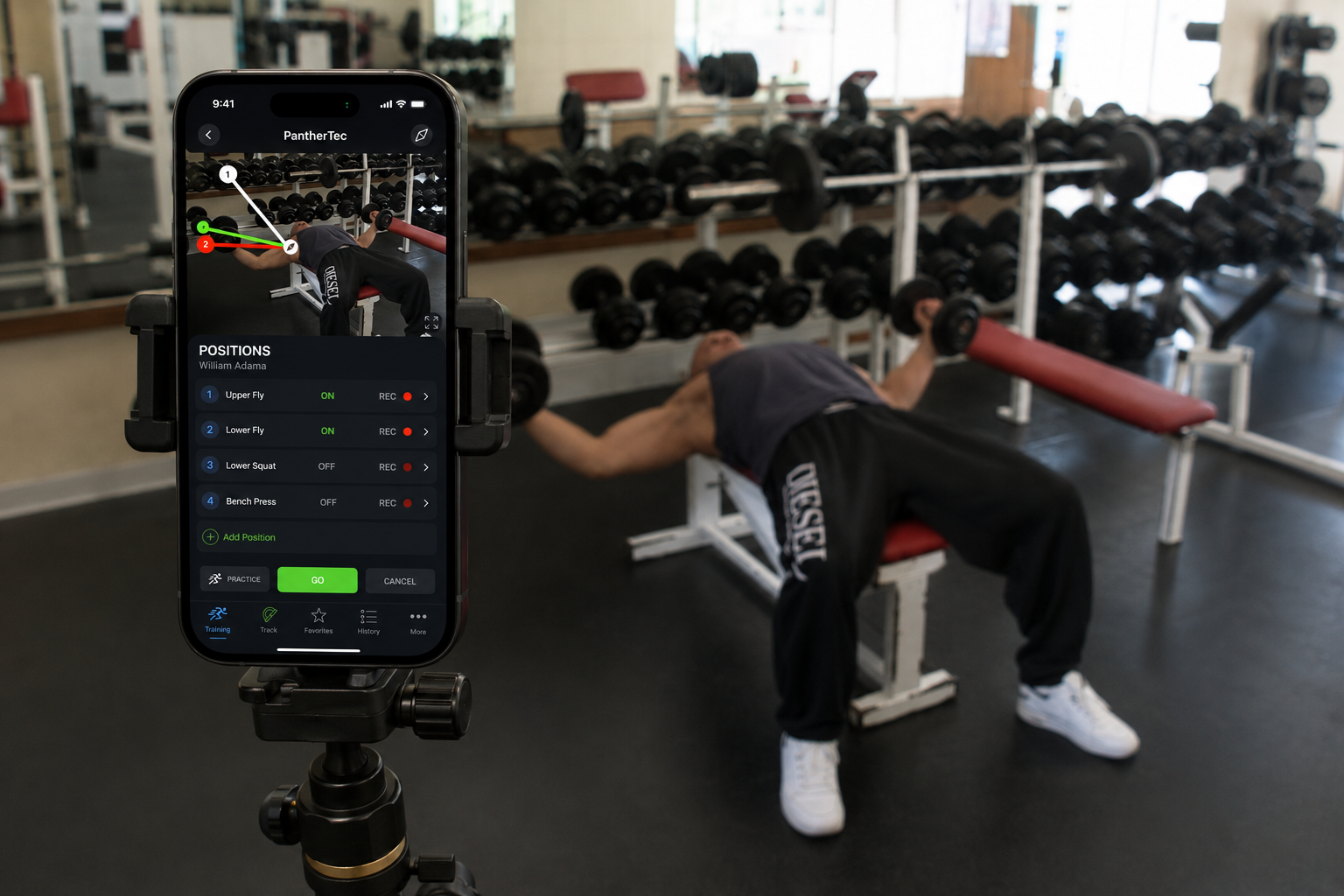
Made real-time motion tracking accessible to coaches and therapists — capturing movement data, analyzing performance, and enabling remote patient monitoring across the country.
Role
Lead UX Designer
Company
TAP Developers
Platform
Mobile (iOS · Android)
The Challenge
Panthertec began with an ambitious idea developed by a PhD in sports therapy: use real-time motion tracking to understand how athletes and patients move, identify opportunities for improvement, and measure performance over time. The technology had the potential to bridge athletic coaching and physical therapy—allowing coaches, therapists, and athletes to observe movement remotely during training, rehabilitation, and even athletic performance. But turning the science into a usable product presented an extraordinary UX challenge. Motion-tracking technology was not readily accessible to the public. It was largely controlled by industries such as gaming and security, while the underlying science was complex enough to intimidate anyone without a technical or scientific background.
My role was to understand both worlds—the scientific theories and technical capabilities behind the system—and translate them into an experience that an athlete, patient, coach, or remote therapist could naturally understand and use on a mobile device.
Process & Approach
Domain Research
Worked closely with the PhD founder to understand the methodology — motion capture, performance analysis, and injury therapy applications.
Complexity Abstraction
Designed the interface to keep the underlying complexity behind the scenes.
Performance Tracking & Comparison
Built the experience around tracking progress over time and enabling comparisons across demographics and specialties.
Remote Monitoring Design
Designed for remote use — enabling therapists to monitor patients across the country.
Outcomes & Impact
Remote
Patient monitoring enabled across the country
Objective
Movement data replacing subjective in-person assessment
Accessible
Sophisticated motion tracking made usable by coaches and therapists
Although the Panthertec proof of concept cannot be shown publicly due to an NDA, the project represents one of the clearest examples of what I believe UX design is actually about. The challenge wasn't creating an interface that looked impressive enough to attract attention in an app store; it was taking sophisticated science, emerging technology, and complex movement analysis and making it useful to someone who shouldn't have to understand any of it to benefit from it. Panthertec was therapy and coaching brought together through technology, and my job was to make that technology feel simple. The interface needed to be visually appealing, certainly, but more importantly, it needed to make the right information accessible, guide users through the right actions, and remove unnecessary complexity.
That's where the art of UX lives: not in making technology look impressive, but in understanding the problem, understanding the people you're solving it for, and creating an experience that makes something extraordinarily complicated feel remarkably simple.